Our Services

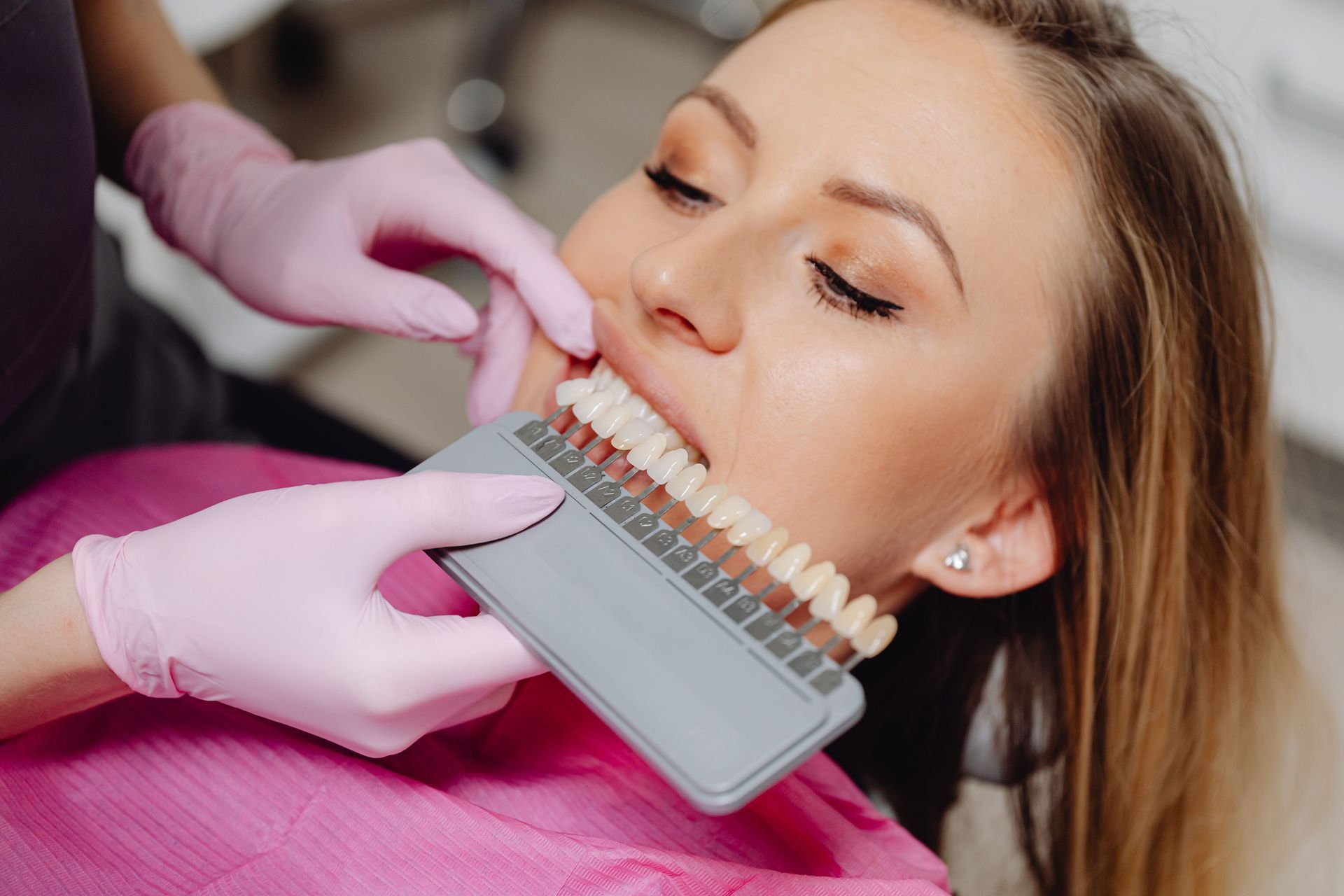
Whitening, Veneers, Crowns, Chair-Side Bonding and Tooth Reshaping, Smile makeover.
Whitening: “Teeth bleaching” is a very safe, minimally invasive and commonly performed dental procedure which leaves patients very happy with the results. Whereas polishing may only lift superficial stains off teeth, bleaching is based off a mini chemical reaction done on the visible surfaces of the teeth, too lift stains that are more internal.
Veneers: Whereas a crown or “cap” is used to build up or strengthen a tooth that has lost a lot of tooth structure a veneer is a more conservative option to cover only the visible surface of a tooth for esthetic reasons. It is like a thin shell or acrylic nail that is designed and made in a lab out of porcelain or zirconia to be permanently bonded onto the front of a tooth. To have a veneer placed there is only minimal preparation to the tooth, sometimes without freezing. One of the benefits of having a veneer done versus “chairside bonding” is that it stands the test of time a lot better as they do not stain and chip as easy as bonding does.
Chair-Side Tooth Bonding and Reshaping-is essentially using the same bonding materials we would use to place a “white filling” to build and sculpt teeth how a patient desires.
Smile Makeover: Depending on the current state and health of a patients teeth we can use a combination of these different techniques including the previously discussed crowns, bridges, implants to obtain the smile they’ve always wished for
Cosmetic Dentistry
Our Services

Sedation
Nitrous: It is the safest and most commonly used form of sedation chairside for dentistry. It offers a quick and safe option as it is inhaled during the procedure and then turned off once the procedure is done. Because it is inhaled, and doesn’t go systemically like swallowing or injecting a medication, as soon as the mask is off and the patient has had a few minutes to breathe full oxygen, they are back to normal and can drive themselves home. We only ask that patients not eat or drink anything 2 hours prior to using nitrous. It works to reduce a patient's anxiety, as well as the added benefits of relaxing muscles, gag reflexes, busy tongues, fidgeting, which makes it ideal for kids needing a lot of dental work done. They are still awake and responsive in the chair; it just allows the clinician to get in and do their job more efficiently and quickly. For kids that are 3 years old and under, those on the spectrum or ADHD diagnosed, this form of sedation may not take effect.
Oral Sedation: In our office, this option is only available for adults. It usually works by giving a prescription medication here, 30 minutes to an hour before a procedure, to help with those who suffer from severe anxiety. For this option, the patient is requested to have a driver and someone to monitor them until the medication wears off.
General Anesthesia (GA): For the patients who can NOT tolerate dental work chairside with other forms of sedation, whether it be they are too young, behavioural/neurological concerns (ADHD, sensory issues, autism, special needs) or even adults suffering from severe dental phobia, sleep dentistry for their dental work is an option. A qualified anesthesiologist comes into the office and performs the general anesthesia with two recovery nurses while Dr. Megan performs the dental work. After the dental work is complete, the patient stays with the recovery nurse and is under full observation by the anesthesiologist until they wake up. The patient is then dismissed and is given strict post-op instructions with the help of their caregiver.
Botox
Nightguards, Botox
A nightguard is a custom fabricated appliance or splint a patient wears at night time or sometimes during the day to prevent and treat symptoms associated with clenching, grinding and TMJ disorder. Sometimes only your dental providers can see the effects of what is going on with some of these habits. Did you know about 50% of patients that think they breathe through their mouth because they snore or have apnea are actually clencher/grinders in their sleep!
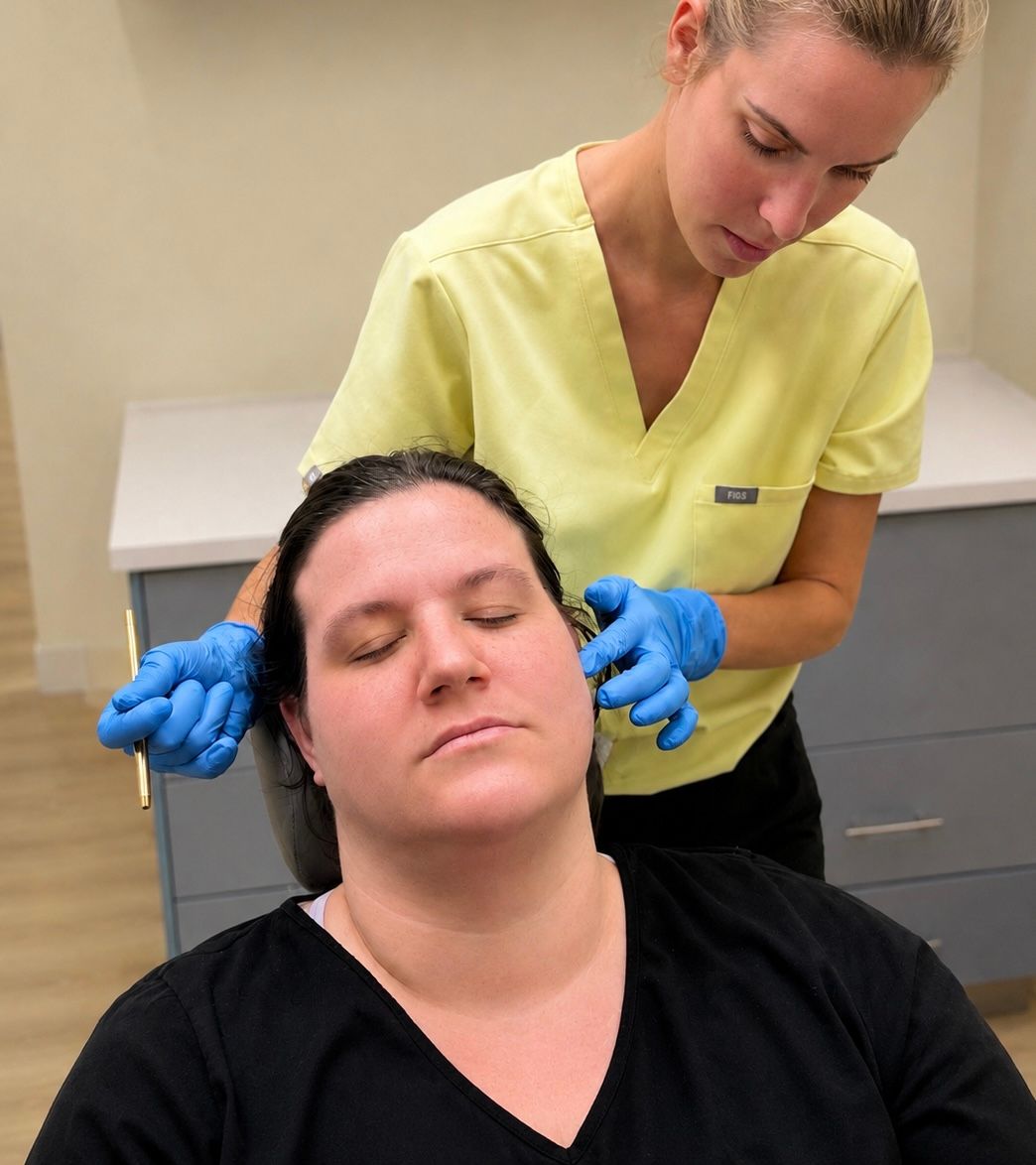
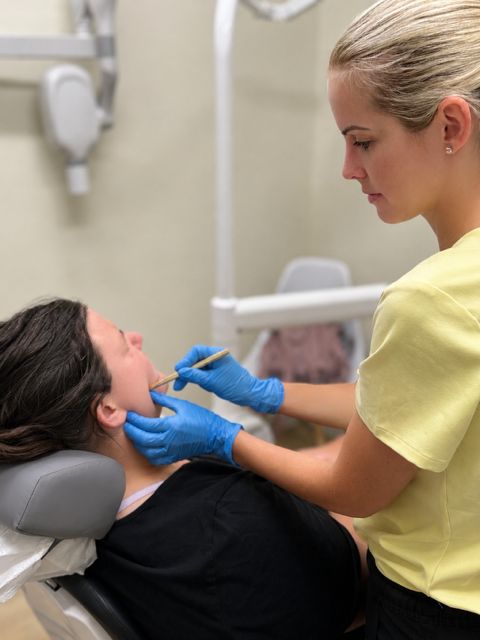
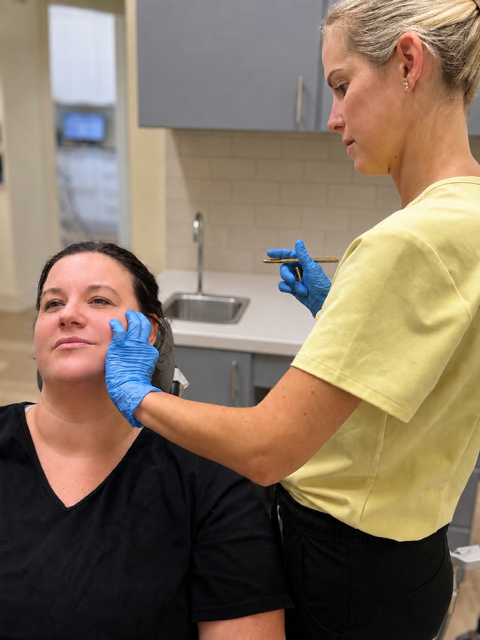
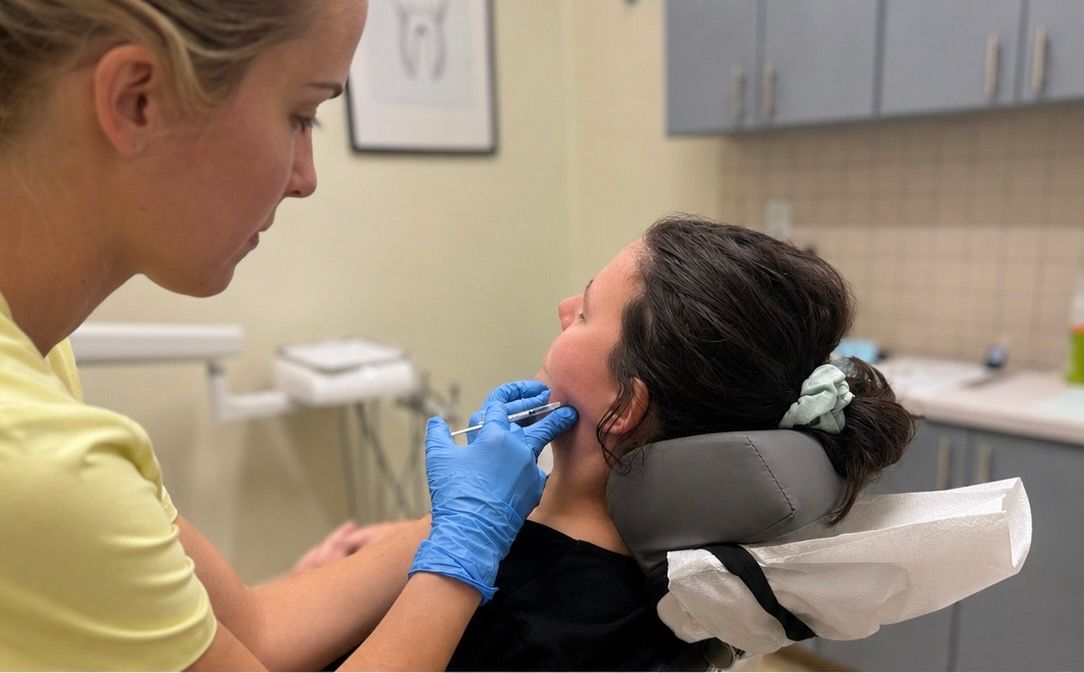
Botox can be a very useful, and nowadays, a more commonly used neuromodulator to treat temporomandibular joint bruxism (TMJ), its symptoms and/or chronic migraine headaches. Botulinum Toxin A (BOTOX ) and Dysport are some of the most widely used brands for injections and what we use in our office. For TMJ injections it works to relax jaw muscles. Some patients notice effects instantly, while some may take 2 or 4 weeks to see full results. Migraine injections block pain neurotransmitters and may reduce frequency and severity of headaches. The results can last typically last 3–6 months.